The Fizz Test: Why Baking Soda and Baking Powder Aren't the Same
If your kid has ever asked why there are two white powders in the baking cupboard, this one's for you. The Fizz Test takes three cups, a few pantry staples and about 15 minutes, and it answers the question in a way kids can see and hear.
What you need
- 3 clear cups or small jars
- Tape and a marker for labels
- A tray to catch spills
- 2 tsp baking soda
- 1 tsp baking powder
- 2 tbsp vinegar
- 4 tbsp water
- Measuring spoons
How to run it
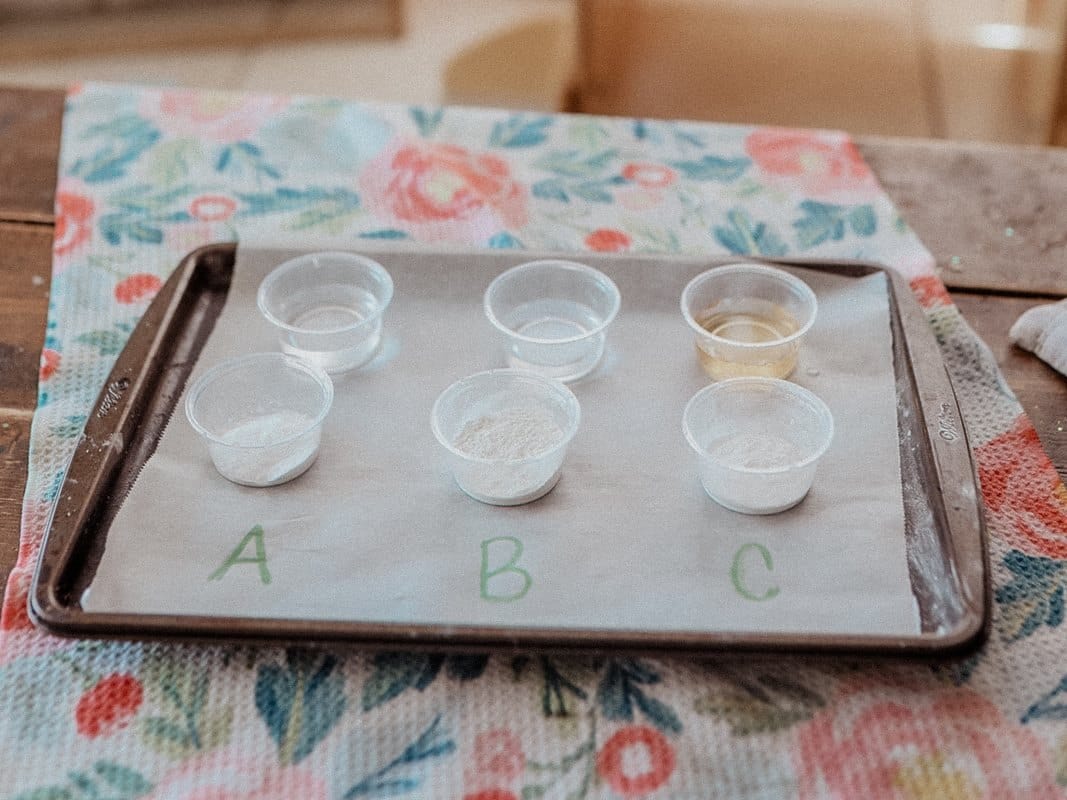
- Label the cups A, B and C and set them on the tray.
- Put 1 tsp baking soda in cups A and C. Put 1 tsp baking powder in cup B.
- Before anyone pours, have everyone guess which cup will fizz the most. Then go in order: A, then B, then C.
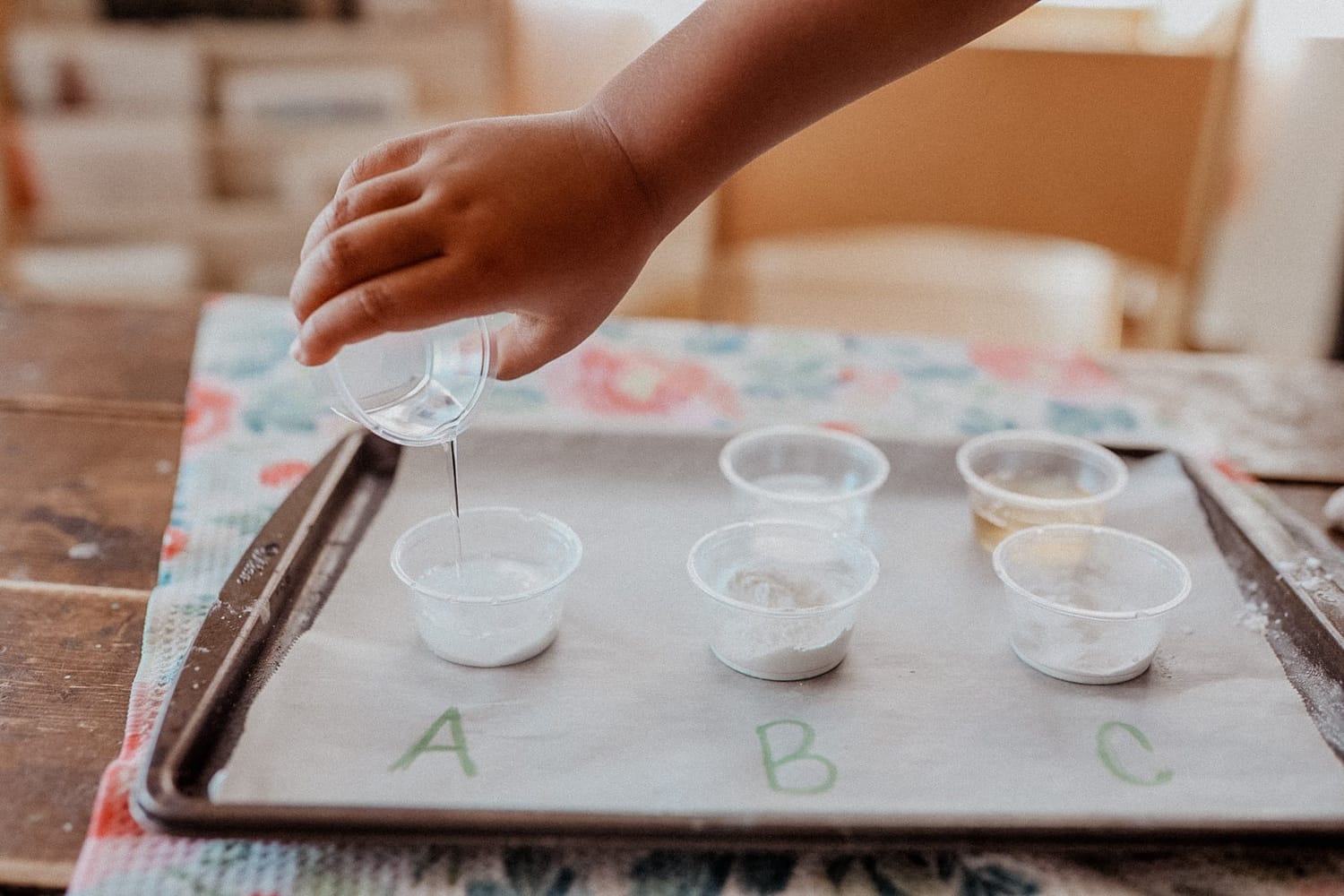
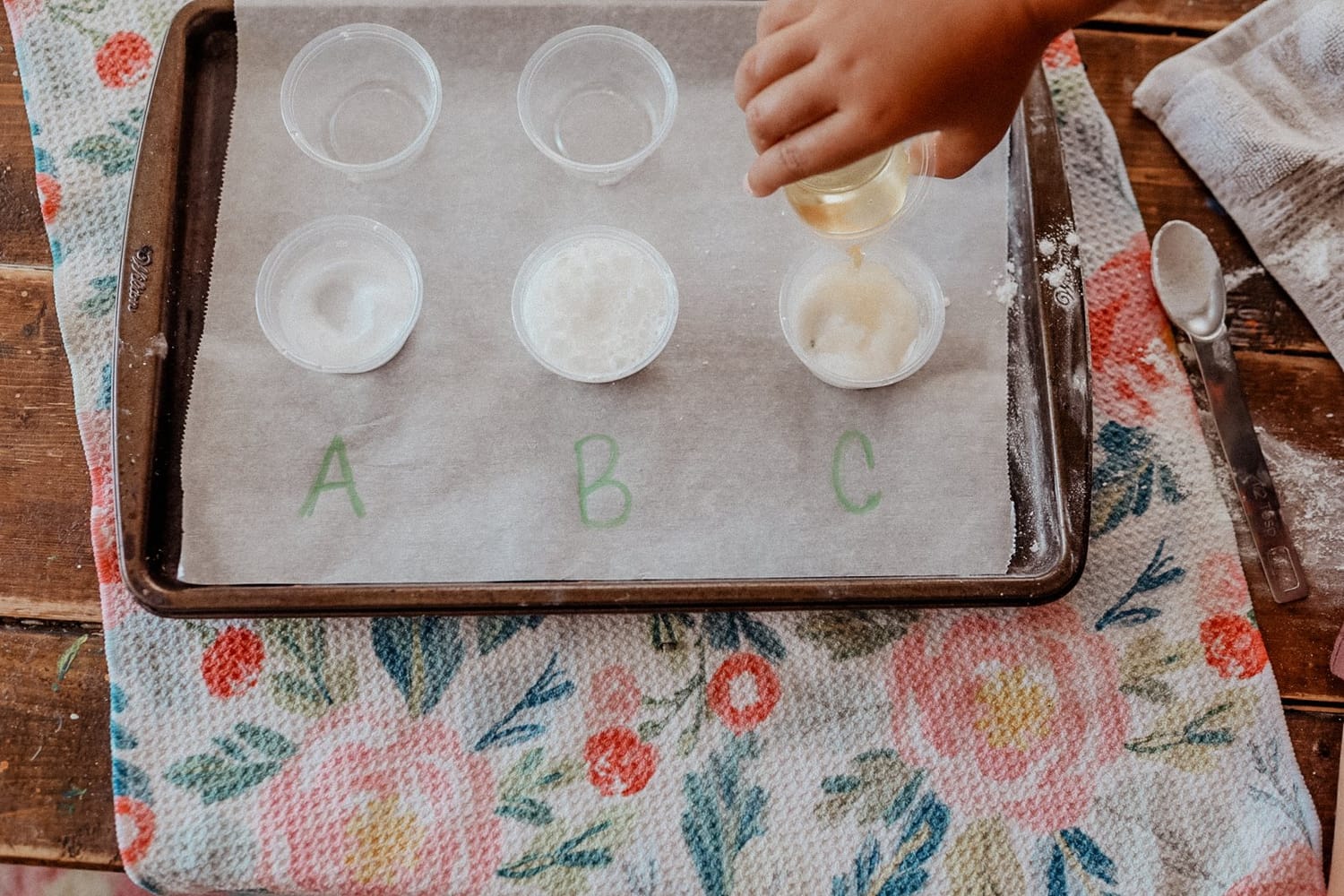
- Pour 2 tbsp water into cup A, then 2 tbsp water into cup B, then 2 tbsp vinegar into cup C.
- Watch and listen. Which fizzed the most? Which barely fizzed?
What happened, and why
Cup A barely fizzes. Baking soda and water alone have no acid to react with.
Cup B fizzes, even with plain water. Baking powder is baking soda with a dry acid already mixed in, so water is all it needs to get going.
Cup C fizzes big. Baking soda is a base and vinegar is an acid. When they meet, they make carbon dioxide, the same gas bubbles that help cakes and cookies rise.
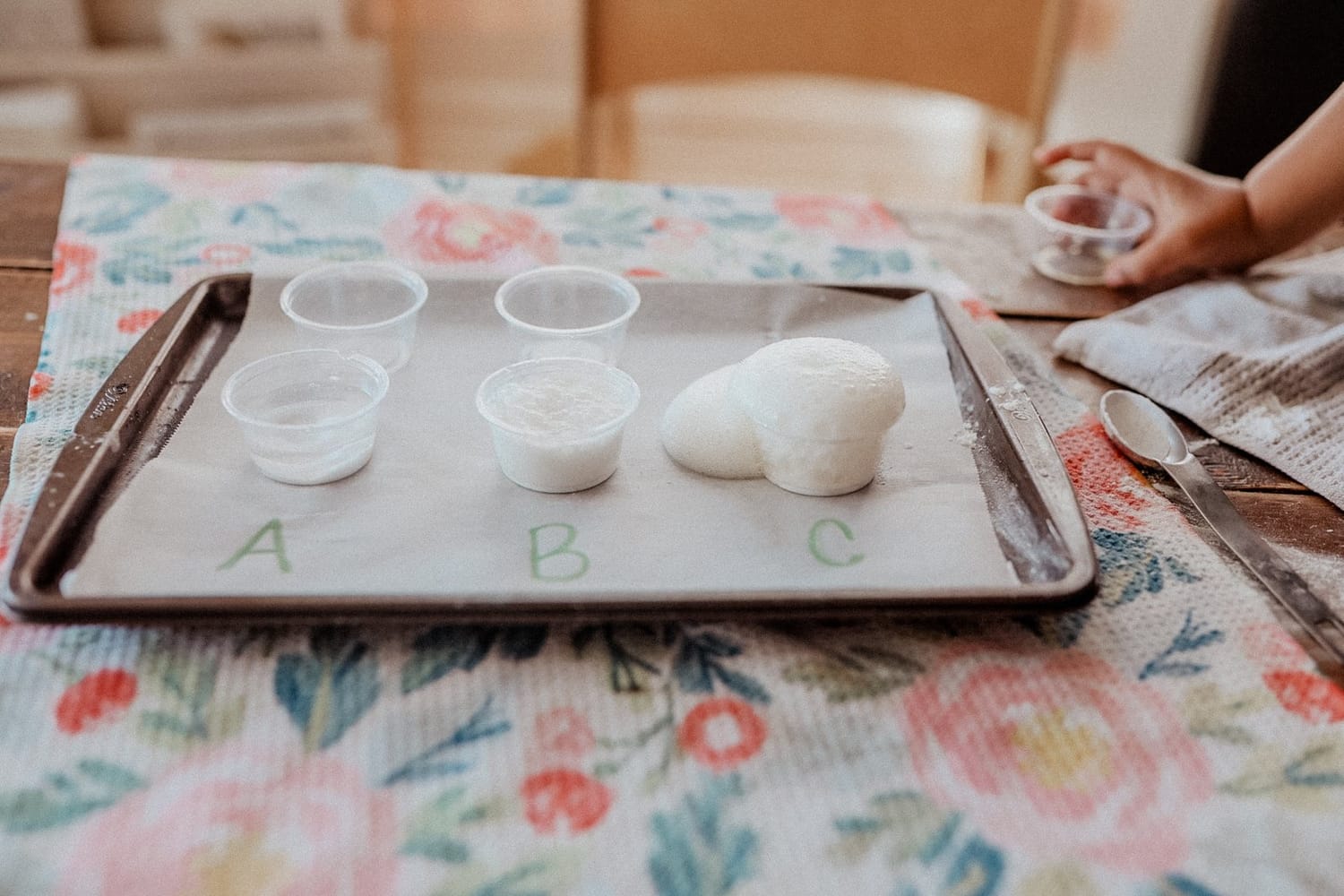
Fair warning: once our kids saw cup C bubble over, they asked to run it again a few more times. Keep extra baking soda and vinegar nearby.
Why it matters when you bake
This is why recipes call for one or the other. Baking soda needs an acid somewhere in the recipe, like buttermilk, lemon, brown sugar or honey. Baking powder brings its own. Double-acting baking powder bubbles once when it gets wet and again in the heat of the oven.
It's also why we level our spoons. A heaped spoonful can almost double the baking soda, and too much soda makes a bake taste bitter.
Try it next: swap lemon juice for the vinegar in cup C and see what happens.
Then bake
In our lessons, the Fizz Test comes right before Snickerdoodles, so kids put the bubble makers to work the same day.
Get the full Fizz Test lesson, free
The printable version has a read-aloud science page, the experiment card and a lab sheet for littles and big kids.
Send me the free lesson
Hi, I'm a homeschool mom of five
Brave Little Blossoms started as my notes from teaching my own kids in the kitchen, turned into lessons for yours.
Get the free Fizz TestKitchen unit studies
Once-a-week lessons for ages 4 to 12, with a grown-up page for every lesson.
Shop the kitchen packs